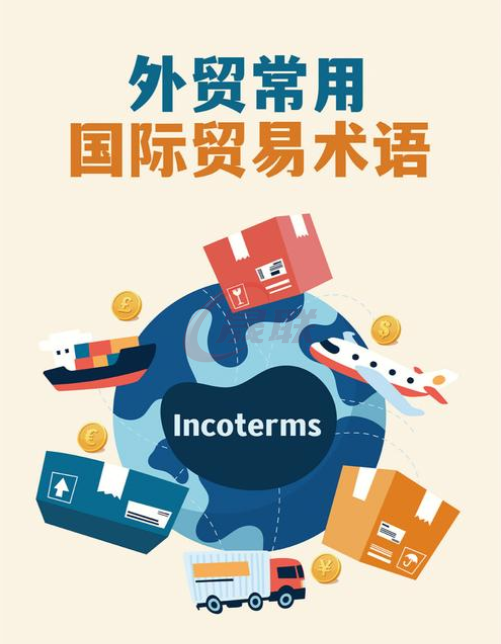
Incoterms
International Trade Terms Overview (General Edition)
This table systematically organizes commonly used abbreviations in international trade and cross-border logistics. It is divided into nine major categories—trade terms, transportation and logistics, payment and settlement, documents and documentation, inspection and certification, tariffs and compliance, marketing and sales, e-commerce and platforms, and logistics status and exceptions—and covers 90 high-frequency terms, including FOB, CIF, EXW, DDP, L/C, T/T, B/L, TEU, ETA, HS Code, AEO, and LCL. Each term is provided with its full Chinese and English names and a concise definition, making it easy for foreign trade salespeople, customs declarants, and cross-border e-commerce practitioners to quickly look up and cross-reference.
I. Trade Terms
1. FOB: Free On Board; risk transfers to the buyer after the goods pass the ship's rail
2. CIF: Cost, Insurance and Freight; includes insurance and freight
3. EXW: Ex Works; the buyer is responsible for pickup and bears all costs and risks
4. DDP: Delivered Duty Paid; the seller bears taxes and customs clearance procedures
5. L/C: Letter of Credit; the bank acts as a credit intermediary to guarantee payment
6. T/T: Telegraphic Transfer; usually divided into advance deposit and balance payment
7. O/A: Open Account; the seller ships first and the buyer pays later, so the seller has higher risk
8. B/L: Bill of Lading; document of title to the goods and basis for taking delivery
9. C/O: Certificate of Origin; used for tariff preferences and customs clearance
10. C/I: Commercial Invoice; settlement document listing the value of goods and transaction information
II. Transportation and Logistics
11. TEU: Twenty-foot Equivalent Unit
12. FEU: Forty-foot Equivalent Unit
13. ETA: Estimated Time of Arrival
14. ETD: Estimated Time of Departure
15. CY: Container Yard; a place for container handover and storage
16. CFS: Container Freight Station; a place for loading and unloading LCL cargo
17. THC: Terminal Handling Charge
18. Demurrage: container overdue usage fee
19. Detention: port detention charge; fee incurred while goods are detained at the port
20. SOC: Shipper Owned Container
III. Payment and Settlement
21. Sight L/C: sight letter of credit; payment upon presentation of documents
22. Usance L/C: usance letter of credit; deferred payment
23. DP: Documents against Payment
24. DA: Documents against Acceptance
25. CAD: Cash Against Documents
26. T/T 30% advance: 30% advance payment by telegraphic transfer; balance paid against copy of bill of lading
27. SWIFT: Society for Worldwide Interbank Financial Telecommunication code; used to identify banks
28. IBAN: International Bank Account Number; mainly used in Europe
29. Payment Bond: payment guarantee provided by a bank for the buyer
30. AML: Anti-Money Laundering review
IV. Documents and Documentation
31. PL: Packing List; lists cargo details
32. AWB: Air Waybill; used for air freight cargo
33. MBL: Master Bill of Lading
34. HBL: House Bill of Lading
35. B/L Surrender: telex release bill of lading; goods can be picked up without the original bill of lading
36. FORM A: Generalized System of Preferences Certificate of Origin; for tariff preferences
37. S/O: Shipping Order
38. D/O: Delivery Order
39. PSI: Pre-Shipment Inspection
40. CCV0: Customs invoice (Combined Certificate of Value and Origin)
V. Inspection and Certification
41. SGS: SGS-CSTC Standards Technical Services Co., Ltd.; provides inspection and certification services
42. BV: Bureau Veritas
43. QA/QC: Quality Assurance/Quality Control
44. RoHS: Restriction of Hazardous Substances Directive for electrical and electronic equipment
45. CE: EU product safety certification mark
46. FDA: U.S. Food and Drug Administration certification
47. ISO: International Organization for Standardization certification
48. FSC: Forest Stewardship Council certification
49. REACH: EU regulation on Registration, Evaluation, Authorization and Restriction of Chemicals
50. UL: Underwriters Laboratories safety certification
VI. Tariffs and Compliance
51. HS Code: Harmonized System Code
52. VAT: Value Added Tax
53. GSP: Generalized System of Preferences tariff
54. Duty Drawback: export tax rebate
55. BIS: Bureau of Indian Standards certification
56. CCC: China Compulsory Certification
57. CITES: Convention on International Trade in Endangered Species of Wild Fauna and Flora
58. AEO: Authorized Economic Operator with customs-certified credit qualification
59. C100: Chamber of Commerce certification; used for unofficial commercial documents
60. LCL: Less than Container Load
VII. Market and Sales
61. MOQ: Minimum Order Quantity
62. OEM: Original Equipment Manufacturer
63. ODM: Original Design Manufacturer
64. SKU: Stock Keeping Unit
65. FOB Price: free on board price; excluding international freight
66. CBM: Cubic Meter; unit for calculating cargo volume
67. GMV: Gross Merchandise Volume
68. KYC: Know Your Customer; identity and background investigation
69. RFQ: Request for Quotation
70. P/I: Proforma Invoice; used for quotations and applying for letters of credit
VIII. E-commerce and Platforms
71. B2B: Business to Business e-commerce
72. B2C: Business to Consumer e-commerce
73. DDP: in cross-border e-commerce, often refers to door-to-door with duties and shipping included (Delivered Duty Paid)
74. FBA: Fulfillment by Amazon
75. DTC: Direct-to-Consumer
76. SEO: Search Engine Optimization
77. CTR: Click-Through Rate
78. ROI: Return on Investment
79. COD: Cash on Delivery
80. PPC: Pay Per Click advertising
IX. Logistics Status and Exceptions
81. Rollover: cargo space temporarily cancelled by the shipping company
82. Port Congestion: port congestion leading to cargo detention
83. Overbooked: shipping, rail, or flight space is full
84. Customs Inspection: customs inspection
85. Forced Export: undeclared forced export (a violation)
86. Lowball Pricing: freight forwarders take orders at low prices and then add surcharges
87. Buying Export: borrowing another company's name for customs declaration
88. Undervalued Declaration: underreporting cargo value to evade tariffs (a high-risk act)
89. Consolidated Declaration: multiple shipments combined for customs declaration
90. Rejected Declaration: the customs declaration is rejected and needs to be revised and resubmitted