Industry Research
178 tariff exclusions on U.S. goods expire on November 9; exporters should first self-check three things.
The 178 product exclusions under the U.S. Section 301 tariffs on China will officially expire.
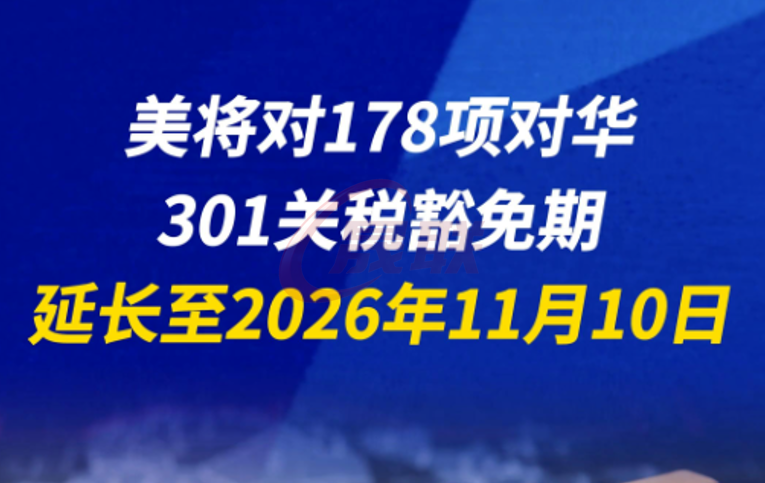
At 11:59 p.m. Eastern Time on November 9, the 178 product exclusions under the U.S. Section 301 tariffs on China will officially expire.
As of press time, the Office of the United States Trade Representative (USTR) has not issued any extension announcement. Once the exclusions expire, the goods covered by this batch will return to the original tariff levels of their respective lists.
If you have export business to the United States, it is worth self-checking three things in the coming days. Especially the third one—many shipments are already at sea.
I. First, understand what is expiring
The 178 exclusions expiring this time are divided into two groups.
One group consists of 164 items (HTS number 9903.88.69), which were extended in May 2024 and subsequently extended three more times in succession, most recently at the end of November 2025—after the China-U.S. economic and trade consultations reached outcomes, USTR announced an extension, published in the Federal Register on December 1 (90 FR 55232). The other group consists of 14 items (HTS number 9903.88.70), newly approved in September 2024 for solar manufacturing equipment exclusions, exempting the 25% under List 2.
Now this window has come to an end.
What does the expiration of the exclusions mean? Simply put: these products change from "exempt from additional tariffs" back to "subject to additional tariffs as usual." They return to the tariff rates of the lists to which they belong—25% additional tariffs under Lists 1, 2, and 3, and 7.5% under List 4A.
Which tier applies to you depends on where your product sits in the Section 301 lists, and this can be checked directly. The complete list of the 178 items is available on the USTR website and in interpretations by various customs brokers. Check it against your own HS code—a three-minute task. Many companies are indifferent to this exclusion because the exempt status has lasted so long that they have forgotten it was time-limited in the first place.
II. Key rule: determined by entry date, not shipment date
This is the easiest point to stumble on, and it is also the focus of this self-check.
The timing for determining the Section 301 additional tariffs is based on when the goods complete "entry for consumption" declaration in the United States, and has nothing to do with when the goods were loaded onto the ship in China. Goods shipped in October but declared for entry after November 9 will still be subject to the post-additional tariff rates.
Goods placed in bonded warehouses are subject to different rules: the date is calculated based on the date they are withdrawn from the bonded warehouse for consumption. If the withdrawal date is after November 9, the tariffs still apply.
Therefore, the next steps fall into two scenarios.
If you can make it: confirm with your freight forwarder and customs broker the estimated entry time of goods in transit. If entry for consumption can be declared before 11:59 p.m. Eastern Time on November 9, clear customs within the window, and what you save is the 25% or 7.5% additional tariff portion.
If you cannot make it: be mentally prepared. The tariff cost of these goods must be calculated on the post-additional tariff basis. Quotations, profit calculations, and negotiations with customers on cost sharing should all use the new basis. Do not wait until the bill arrives to discover that the budget was calculated based on the exemption period.
III. The tariff assumptions in quotations should now include an expiry date
This expiration has exposed a blind spot in the quotation systems of many companies: tariff assumptions have been written as constants.
The Section 301 exclusion mechanism is essentially a pressure relief valve during the trade war. Its form of existence is "extended from time to time": it was extended four times in two years, and the shortest extension was only 90 days. Every extension represents uncertainty.
The practical lesson for companies is: in quotations for U.S. orders, tariff assumptions must have a sense of time. A quotation may be valid for three months, while the tariff window may have only six days left. For customers on long-term agreement prices, the terms should preferably clearly set out the cost-sharing mechanism for tariff changes. This is not pessimism; it is writing uncertainty into the contract so that it does not end up in the income statement.
As for whether there will be another extension, there is currently no official signal. Last year, the outcomes of China-U.S. consultations led to an extension. This November window is likewise in a sensitive period of agreement implementation, and another extension is possible. But this is a matter of waiting for official news. Before an announcement is issued, preparing on the basis of expiration is the only prudent posture for companies.
One more thing: the suspension of the vessel fee is also still awaiting implementation
In the same batch that needs to be watched is the direction of the Section 301 vessel fee. The current suspension period also expires at 11:59 p.m. Eastern Time on November 9. On October 26, USTR proposed extending the suspension period by another two months to January 9, 2027 (Federal Register 91 FR 67388). The comment period closed on October 30, and the final announcement has not yet been issued. It should be noted that this fee is charged to shipping companies, and its impact on exporting companies is indirect, ultimately passing through to freight rates. For calculations involving logistics costs, it is likewise recommended to wait for the final announcement before finalizing them.
For the U.S.-related line, regulatory costs are in a period of intensive changes before the end of the year. Exclusions expiring, the vessel fee pending, and the next round of list adjustments may appear at any time—each item directly lands on the cost sheet.
First finish these three things: check the list, verify the shipping schedule, and revise the quotation assumptions. For the rest, wait for USTR's announcement.