Information
Company News
Latest updates and insights.
 Repricing of export tax rebates
Focusing on the profound shift in the underlying logic of export tax rebate policy against the current background of a tight fiscal revenue-expenditure balance: in the traditional framework, export tax rebates were a trade “shock absorber” for stabilizing external demand; today they have become a repricing lever for coordinating fiscal space and industrial upgrading, and the policy objective function has shifted from the single goal of stabilizing foreign trade to the dual goals of fiscal balance and industrial upgrading. The article reviews the four-stage evolution of export tax rebate policy since 2000 and points out that after the central government assumed the full burden in 2015, it has become a purely central macro-control instrument with rapid transmission; since 2024, phased reductions for categories such as photovoltaics and batteries have marked a shift in function from broad-based “stabilizing foreign trade” to structural “using rebates to promote adjustment.” Drawing on historical cases in textiles and apparel, steel, and other sectors, the article argues that rebate cuts do not necessarily lead to an immediate decline in export share; supply chain resilience and customer stickiness are the determining variables of short-term competitiveness. This round of policy targets industries with “low rebate dependence and high involution,” aiming to break low-price competition and push profits back toward technology and brand segments. Estimates show that the rebate adjustment for the “new three” exports is expected to boost fiscal revenue by about RMB 105.2 billion in 2027, accounting for about 4.9% of the total scale of export tax rebates; its medium- and long-term value lies in gaining an external buffer and accelerating internal clearing, with leading firms relatively benefiting and tail-end capacity under pressure. The article concludes by flagging risks such as geopolitical rivalry, a downturn in external demand, the pains of capacity clearing, and deviations in estimation assumptions.
Read more
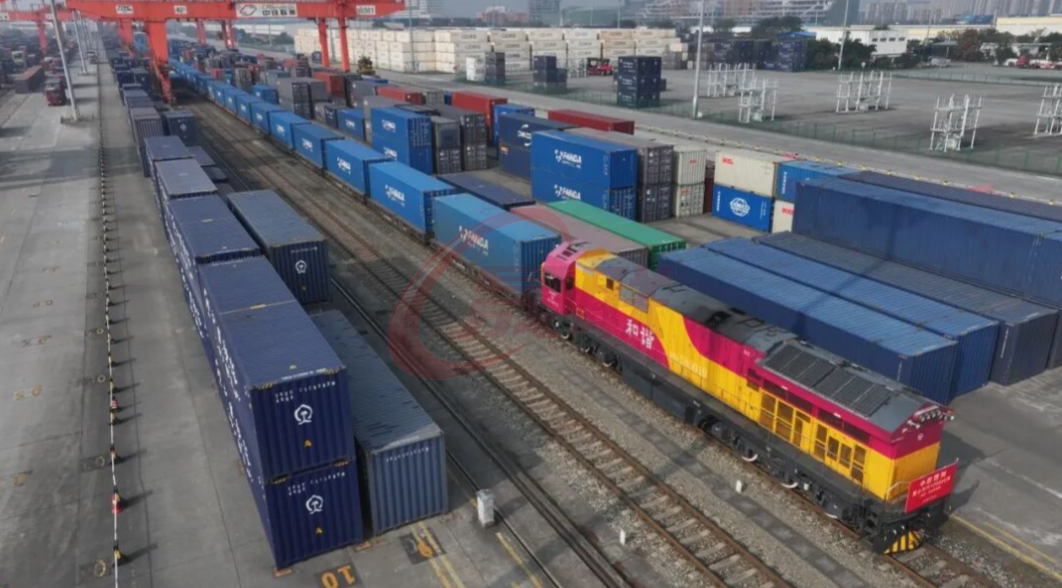 The Path of Progress Toward High-Quality Development of the China-Europe Railway Express (Xi'an)
As a flagship project of Belt and Road cooperation, the China-Europe Railway Express has opened up a new pattern for international transport across Asia and Europe and become an important engine for promoting global economic connectivity. As the starting point of the ancient Silk Road and a core hub city in Belt and Road cooperation, Xi'an occupies an important position in the development landscape of the China-Europe Railway Express.
Read more
 178 tariff exclusions on U.S. goods expire on November 9; exporters should first self-check three things.
The 178 product exclusions under the U.S. Section 301 tariffs on China will officially expire.
Read more